Aircraft Storage - We and our partners use cookies to store and/or access information on the device. We and our partners use the data for personalized ads and content, ad and content measurement, audience insights and product development. An example of data to be processed can be a unique identifier stored in a cookie. Some of our partners may process your data as part of their legitimate business interests without consent being required. To see the purposes for which they believe they have a legitimate interest, or to object to the processing of this data, please use the supplier list link below. The consent given will only be used for the processing of data obtained from this website. If at any time you wish to change your preferences or withdraw your consent, a link to do so is provided in our privacy policy located on our website.
A close-up of a stored SpiceJet 737 MAX at Painfield following the plane's global grounding earlier this year. (Photo: | Katie Bailey)
Aircraft Storage

With Covid-19 destroying the travel industry, demand has dropped to almost zero. The plan has been sent to storage for who knows how long. Many aircraft will enter service as demand picks up, but some will be stored longer as it will likely take some time for demand to return to normal. However, there is a whole process involved in keeping aircraft in stock, and it is not as simple as parking a car on a corner and leaving some reflections on the windshield.
Aircraft Storage Hi Res Stock Photography And Images
The first thing to consider when parking an aircraft long term is the weather. Constant freezing temperatures can damage the tires. In addition, moisture in the air can cause corrosion. Therefore, many aircraft are sent to aircraft storage facilities in dry climates with little rainfall.
In some cases, when the aircraft is placed in a deeper storage mode, the engines are preserved and sensitive parts such as batteries are removed. While this makes the aircraft cheaper to store, it limits how quickly the aircraft can return to active service. It can often take 120 operating hours to get an aircraft into airworthy condition after storage.
One of the biggest threats to aircraft in storage is rust on the engines. Aircraft engines are designed with the idea that they will be used regularly, so any length of grounding requires proper maintenance. Engines that are not run long enough will rust due to water condensation that often occurs during storage.
For long-term storage, various engine parts must be coated with preservative oils to prevent corrosion. These special oils work better than the normal oil used in aircraft engines to preserve engine parts
Safety Concerns Arise As Jets Sit Idle In Storage
In addition, the engines are "pickled". The oil is replaced with an anti-corrosion solution and desiccant bags are placed in the inlets before they are covered. This entire process prevents corrosion and engine damage. All fuselage openings are also covered with special tape or netting that will prevent insects or small animals from calling these areas their new home. In fact, it is very important to check aircraft nests before launching the aircraft. For shorter storage, the engines should be flushed weekly. Engines should be idled for 15 to 20 minutes to evaporate any moisture that may have accumulated in the oil and fuel systems. Engine parts should be repainted with new oil to prevent corrosion.
Aircraft are usually inspected weekly for corrosion; every two weeks the electrical systems are turned on and tested. About once a month, planes are moved a third of a wheel revolution to prevent tire punctures. Carpets and seats are also inspected for mold and fuel and, if necessary, inspected and dried to prevent water build-up that can lead to bacterial and fungal growth. Every three months, the steering wheel and other controls are activated and moved.
On hot summer days, the doors are opened to provide ventilation so that the cabins are not damaged by the heat. Although this can cause problems before the aircraft is put into service, as dust and grit enter the aircraft and then need to be vacuumed or mopped, which can be a time-consuming and expensive process.
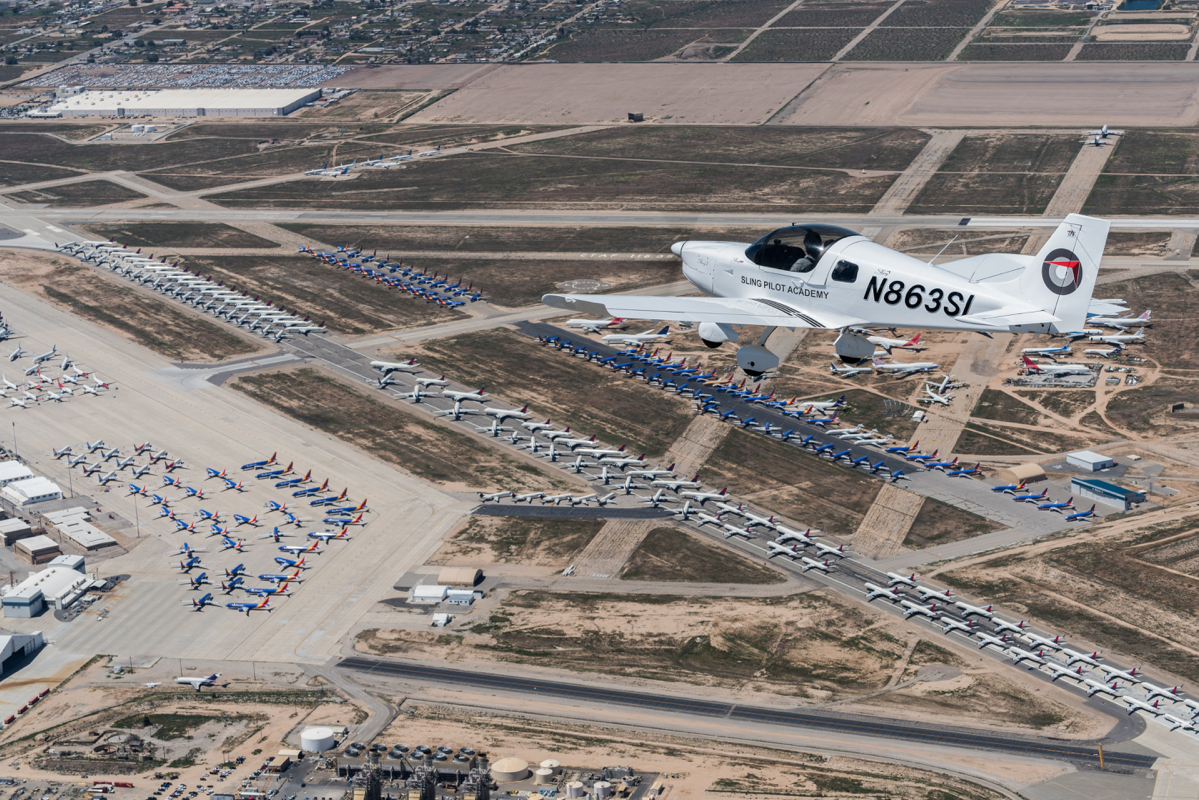
Whether for long-term or short-term aircraft storage, a lot goes into ensuring that airline assets remain in a condition that avoids costly damage and can be returned to service relatively quickly. A good rule of thumb is to always assume that the aircraft will last longer than expected. In this way, the aircraft can be properly prepared for storage right from the start, rather than labor-intensive preservation methods being introduced.
Blog: Planned And Organized Gse Storage Prevents Crunches > Naval Safety Command > News
Hemal took his first flight at the age of four and has been crazy ever since. When he's not working as an analyst, he can often be found outside watching or flying planes overhead. His aircraft is the 747-8i, which luckily Lufthansa flies to EWR, allowing for excellent observations. He firmly believes that the best way to fly between JFK and BIM is through DFW and is always willing to go the extra elite qualification mile. Hemal's views are his own and do not reflect those of his employer.
The Brazilian airline announced a few days ago that the E195-E2 and E190-E2 aircraft have received type certificates from...
Manufacturing giant Boeing has marked the end of an era as its latest 747s rolled off the factory…
Embraer today unveiled new aircraft concepts as part of the company's status report on Energia, Embraer's initiative to get...
Teruel's Passenger Free Airport
[ Aircraft ] Jan 13, 2023 7:00 AM ETBoeing's Ezra GollanBoeing's final 747 series marks the end of an era. Earlier this week, the newest Boeing 747 ever made rolled out of the paint shop in Portland, Oregon, to the consternation of aviation enthusiasts. historians alike. N863GT, the last Boeing 747, rolled off the assembly line in early December 2022 to much speculation as to whether…[ January 12, 2023 7:00 AM ET ] When people think of scheduled flights, the Boeing 737 and Airbus A320 are most likely… the first planes that come to mind…[ 11-Jan-2023 2:26 PM ET ] The US Federal Aviation Administration (FAA) reported that flight operations in US airspace were affected by a failure…[ 11-Jan-2023 12:21 :00 ET ] Conviasa will resume service to Brazil in February with service between Puerto Ordaz (PZO) and Manaus (MAO). Ticket sales... The emergency related to covid-19 has turned into a critical period for all of us in the airline industry. Although it is now clear that the future of air travel is at stake, there is reason for hope. A quick recovery and a return to normal growth rates is not an unlikely scenario.
At the same time, the reality is that commercial flights have declined drastically, and many airlines, lessors and other aircraft operators have started to reduce their fleets. Small and large aircraft around the world will be parked indefinitely.
We have developed some general guidelines to help maintenance organizations and engineers prepare aircraft and facilities for medium-term storage. The document is written with small and large aircraft in mind (CS-23 and 25), but we believe the same principles apply to helicopters (CS-27 and CS-29).

As a result of the reduced air traffic, small and large aircraft will be stored in special facilities. The storage period will vary from company to company, from one month to several months. The recommendations in this article apply to a maximum storage period of 3 months.
With An Influx Of Aircraft Storage, Will There Be An Increased Strain On Parts Supply?
It should be emphasized that the guidelines in this document will never replace the indications contained in official maintenance documents (eg AMM, EMM, SB, etc.) and are intended as recommendations for the organization and planning of storage activities. The purpose of this article is to provide guidelines for the following steps in the storage procedure:
All actions must be coordinated and formally reported to the maintenance organization so that appropriate actions can be recommended. The store's environmental status will also be described.
The optimal storage environment for aircraft should be clean and free of excess dust. The temperature and humidity range should be as follows: Temperature 10°C – 25°C, Humidity 60% – 65%. For small aircraft, it is recommended that the aircraft be raised during storage to avoid stress on the tires and shock absorbers. If the storage environment is cool and dry within the specified range, regular pitot-static and fuel system water contamination checks are not necessary.
The aircraft is assumed to be fully operational and airworthy until the storage date. If not, maintenance activities must be performed to make the aircraft airworthy before it is put into storage. In this phase it
Here's What It Takes To Get Planes Back In Service After They've Been In Storage
Top speed aircraft, speed tape aircraft, aircraft speed brakes, fastest aircraft speed, speed of light aircraft, concorde aircraft speed, speed patrolled by aircraft, aircraft vertical speed indicator, speed monitored by aircraft, hypersonic aircraft speed, aircraft speed indicator, aircraft speed tape cost
0 Comments