Defense Logistic Agency Jobs - This article has many problems. Help improve it or discuss these issues on the talk page. (Learn how and why to remove these message templates)
The use of external links in this article may not comply with Wikipedia's policies or guidelines. Improve this article by removing redundant or inappropriate external links and converting useful links, where appropriate, into footnote references. (October 2022) (Learn how and why to remove this message template)
Defense Logistic Agency Jobs
This article and additional references need to be verified. Please help improve this article by adding citations to trusted sources. Materials not attributed to a source may be challenged and removed. Find resources: "Defse Logistics Agcy" - news newspaper books researcher JSTOR (Oct 2022) (Learn how and why to remove this template message)
Homeland Security Agent Job Requirements
The Defense Logistics Agency (DLA) is a combat support agency of the United States Department of Defense (DoD) with more than 26,000 civilian and military personnel worldwide. Located in 48 states and 28 countries, DLA provides military services and supports its purchases of weapons, fuel, parts, and other materials.
Through other US federal agencies, the DLA also helps provide relief for victims of natural disasters and humanitarian aid for refugees and internally displaced persons.
Based in Battle Creek, Michigan, DLA Disposition Services assists the Army in disposing of surplus items. In addition to typical military supplies such as vehicles and uniforms, Disposition Services also helps the military donate computers to elementary schools through the DoD Computers for Learning program.
DLA energy provides fuel for aircraft, ships, the US space program, and commercial space exploration.
Lrs Facilitates Defense Logistics Agency
DLA Troop Support, based in Philadelphia, Pennsylvania, provides uniforms, meals, medical equipment, construction equipment, and other items to deployed military members. It also supports the USDA and helps provide fresh fruits and vegetables to select US elementary schools and eligible Indian reservations.
DLA Land and Maritime, based in Columbus, Ohio, provides parts and maintenance for military land vehicles and some vessels.
DLA also operates three permanent organizations within three US Army Combatant Commands (COCOMs): DLA CTCOM & SOCOM, DLA Europe and Africa, and DLA Indo-Pacific.

DLA officers are federal officers who have trained at the Federal Law Enforcement Training Center (FLETC) (in Georgia) or the Civilian Police Academy (ACPA) (in Missouri) and have received additional on-the-job training.
Massage Envy; Citi; Defense Logistics Agency: Job Openings
DLA officers wear a typical navy blue city-style police uniform with a "campaign hat" and are armed with a Beretta 92 pistol. Officers can advance through the ranks
The seeds of the DLA were sown in World War II, when the US Army needed to quickly obtain massive amounts of ammunition and supplies. During the war, the military services began to coordinate more in purchasing petroleum products, medical supplies, clothing, and other goods. Army and navy headquarters are identified for each commodity.
After the war, there was a growing call for more complete coordination across the supply chain - including warehousing, distribution, transportation and other aspects of supply. In 1947, there were a lineage of supply systems in the Army, as well as the Air Technical Service Command, and 18 systems in the Navy, including a Marine Corps captain. The passage of the National Security Act of 1947 prompted new efforts to eliminate duplication and overlapping of supply services and paved the way for the eventual creation of a single integrated supply agency. The act created the Ammunition Board, which began reorganizing these major supply classes into joint purchasing agencies. Meanwhile, in 1949, the Committee on Organizing the Executive Branch of Government (the Hoover Commission), a presidential commission chaired by former President Herbert Hoover, recommended an amendment to the National Security Act specifically to strengthen the authority of the Secretary of Defense to incorporate regulation and procedures for the various phases of welfare in military service.
The Ordnance Committee was not as successful as had been hoped in eliminating duplication of services in supply. Congress became frustrated with the board and in the Defense Cataloging and Standardization Act of 1952 transferred the board's duties to the new Defense Supply Management Agency. Eishower Reorganization Plan No. 6 (1953) eliminated both this agency and the Board of Ordnance and replaced them with a single executive director, the Assistant Secretary of Defense for Supplies and Logistics. Meanwhile, the Korean War led to numerous congressional investigations into military supply management, which threatened to force a joint supply service on military services from abroad.
Supply Chain Solutions
Integrated management began in 1958 with the establishment of the Armed Forces Supply Support Center. For the first time, all military services were procured, stocked, and issued according to a common term. The Department of Defense and Services has designated items to be managed on an integrated basis as "expendables," meaning supplies that cannot be repaired or that are consumed in normal use. Consumables, also called goods, were assigned to a single military service to manage all services.
The pressure for unification continued. In July 1955, the second Hoover Commission recommended the centralization of the Department of Joint Military Logistics Support and the introduction of standardized financial management practices. It is also recommended that a separate, entirely civilian-run agency be created within the Department of Defense to manage all joint military service and supply activities. The military services feared that such an agency would be less responsive to military demands and jeopardize the success of military operations. However, Congress remained concerned about the Hoover Commission's allegations of waste and inefficiency in the military services. The Department of Defense changed its position to prevent Congress from passing the matter on to the Army. The solution proposed and approved by the Secretary of Defense was to appoint "unified directors" for a selection of joint procurement and service activities.
Under Defsa's directives, approved by the Assistant Secretary of Defense for Supplies and Logistics, the Secretary of Defense will formally designate one of the three Secretaries of Service as the single director for a selection of commodities or joint service activities. The army provided food and clothing; The Navy handled medical equipment, oil, and industrial parts; The Air Force operates with electronic components. In each category, the individual manager was able to reduce his investment by centralizing wholesale inventory and streamlining the supply process by convincing departments to accept the same standard items. Over the six-year period, the individual management agencies reduced their item allocations by about 9,000, or 20 percent, and their inventories by about $800 million, or 30 percent. Soon, proposals were made to extend this concept to other commodities. The single manager concept was the most important advance towards integrated supply management within the Ministry of Defense or the military services after World War II.

The Defense Cataloging and Standards Act led to the creation of the first federal catalog, completed in 1956. The federal cataloging system provided a structured and systematic approach to describing a supply item, assigning and recording a unique identification number, and providing information on users of the system. The original catalog, containing some 3.5 million items, was a rough draft riddled with duplications and errors, but it effectively highlighted areas where standardization was possible and necessary.
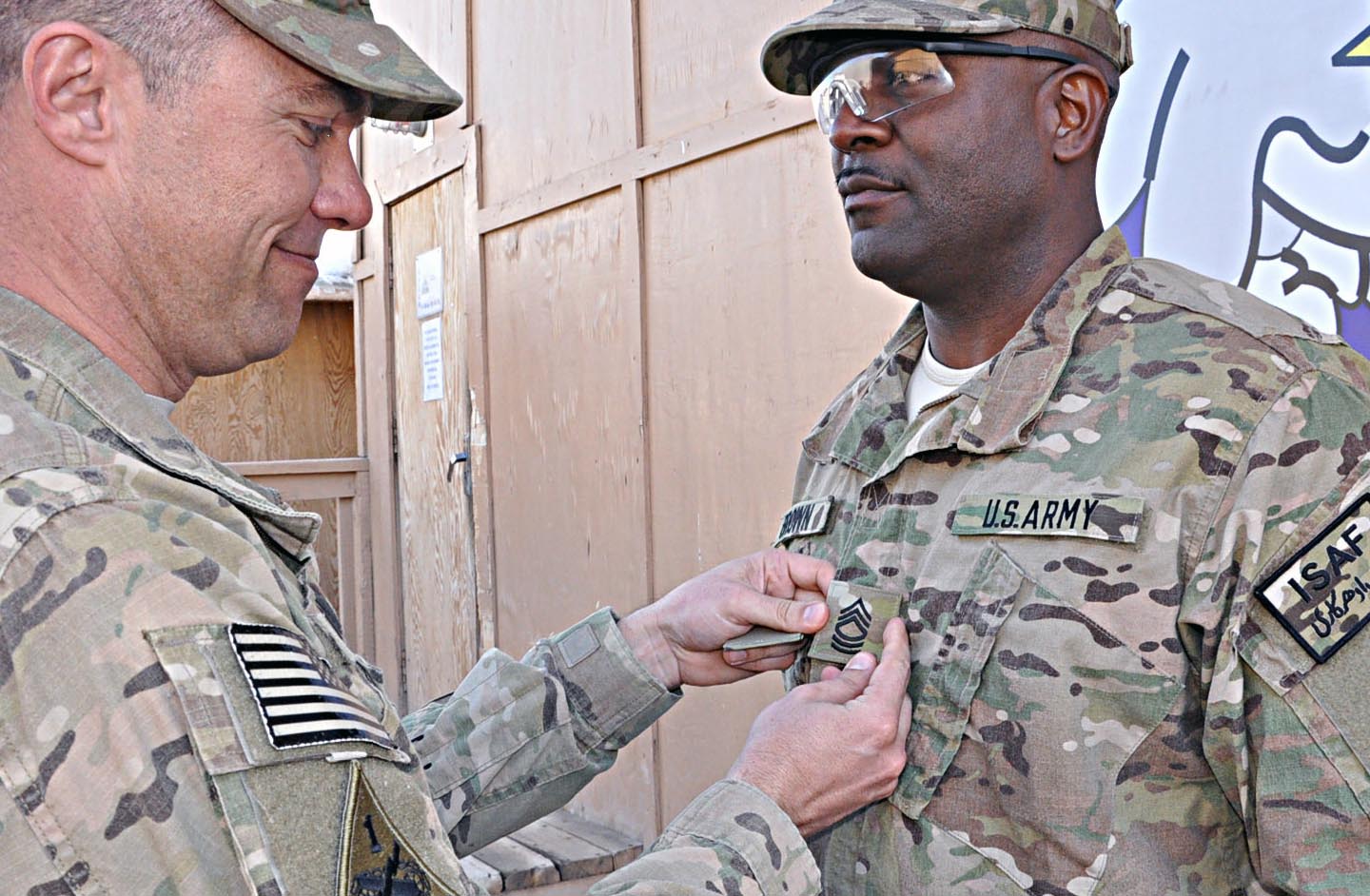
Norfolk Employee Climbs Career Ladder > Defense Logistics Agency > News Article View
When Secretary of Defense Robert S. McNamara took office in the spring of 1961, the first generation of individual directors handled approximately 39,000 items according to procedures with which the services had become familiar. However, it was clear that the single-manager concept, while successful, did not provide for the standardized procedures recommended by the Hoover Commission. Each individual manager operated according to his or her part service procedures, and customers had to use as many combinations of procedures as merchandise managers. Secretary McNamara was convinced that the problem required some sort of "management of directors" organizational arrangement. On March 23, 1961, he convened a group of senior defense officials and directed them to study alternative plans for improving the overall Department of Defense organization of Integrated Supply Management, a task he called "Project 100". The Commission's report highlighted key weaknesses in the multi-manager system of care.
After much discussion between the heads of the agencies and the secretaries, on August 31, 1961, Secretary McNamara announced the creation of a separate Joint Supply and Services Agency to be known as the Defense Agency (DSA). The new agency was officially incorporated on October 1, 1961, under the leadership of Lieutenant General Andrew T. McNamara (no relation to Robert McNamara). McNamara, an energetic and experienced military logistician who had served as quartermaster, quickly assembled a small staff and set up operations in a run-down munitions building in Washington, D.C. Soon after, he moved his staff to more convenient quarters at Cameron Station. in Alexandria, Virginia.
When the agency officially began operations on January 1, 1962, it controlled six commodity and individual service managers: Defse Clothing & Textile Supply Cter (formerly the Philadelphia Quartermaster Warehouse);
Defse Construction Supply Cter, Columbus, Ohio; Defse Geral Supply Cter, Richmond, VA; Defse Medical Supply Cter, Brooklyn, NY; Defse Petroleum Supply Cter, Washington, D.C.; Defse Subsistence Supply Cter, Chicago, Illinois; Department of Defense Movement Management, Washington,
T Rex Solutions, Llc T Rex Is Supporting The Defense Health Agency
Defense logistic, missile defense agency, defense contract audit agency, defense logistic agency, missile defense agency jobs, defense information system agency, dha defense health agency, defense intelligence agency jobs, defense commissary agency jobs, defense intelligence agency, defense health agency, defense contract management agency jobs
0 Comments